

What delivery looks like beyond story points
- 55 Degrees

- 1 day ago
- 3 min read

Delivery leadership today is about more than planning work and tracking progress. It is about creating confidence in environments where uncertainty is the norm.
Delivery Leads are expected to answer difficult questions every day: When will this be done? Are we on track? What’s the risk?
On the surface, these questions sound simple. In reality, they rarely are. Priorities shift. Dependencies appear late. Teams juggle multiple initiatives at once. What looked straightforward on a planning board quickly becomes complex in practice.
To bring structure to that complexity, many organisations rely on estimation. Story points are used with the best of intentions. They help teams align and give stakeholders something tangible to discuss.
But for many Delivery Leads, estimation doesn’t deliver the clarity it promises.
Even with careful planning, delivery often feels fragile. Timelines move. Confidence erodes. Conversations with stakeholders become more tense. Teams feel pressure to commit early, while Delivery Leads are left managing expectations when reality doesn’t match the plan.
At this point, many Delivery Leads start asking a different question:
What if predictability isn’t about estimating better, but about understanding how work actually flows?
Delivery Beyond Story Points
When delivery moves beyond story points, it starts to look less like a plan and more like a system.
Work enters the system, moves through stages, and eventually finishes. Some work flows smoothly. Other work gets delayed, blocked, or interrupted. Over time, patterns begin to emerge.
And those patterns matter far more than individual estimates.
By focusing on flow, Delivery Leads start to see why work behaves the way it does. They see how too much work in progress slows everything down. They see where work consistently waits. They see how variability builds risk long before a deadline is missed. This visibility changes what delivery leadership looks like in practice.
From defending estimates to explaining reality
When flow becomes the focus, the Delivery Lead’s role shifts.
Instead of defending estimates, they help teams and stakeholders understand reality. Instead of reacting to surprises, they surface risk earlier. Instead of promising certainty, they talk openly about likelihood and trade-offs.
This isn’t about abandoning planning or discipline. Estimation can still support team conversations. But it stops being the primary input for system-level decisions.
Delivery leadership beyond story points is about making better decisions with confidence. It’s about using evidence from past delivery to inform future decisions. And creating shared understanding across teams and stakeholders.
For many Delivery Leads, this leads to calmer conversations and stronger trust over time. Stakeholders may not always hear exactly what they want, but they understand why decisions are made. Teams feel less pressure to defend numbers and more space to focus on finishing work.
Moving forward with flow
Flow-based thinking offers a practical way to move in this direction.
By observing how work actually moves through the system, Delivery Leads gain insight into predictability, risk, and capacity that estimation alone can’t provide. It creates a more stable foundation for decision-making, even when uncertainty remains.
If this reflects your experience, you’re not alone. We’ve created The Delivery Leader’s Guide to Flow-Based Metrics, a practical introduction to leading delivery with flow, not points.
It explores how Delivery Leads can move beyond estimation and use real delivery data to improve predictability and decision-making.
If you’d like to go deeper, you can download the full guide and continue the journey beyond story points.
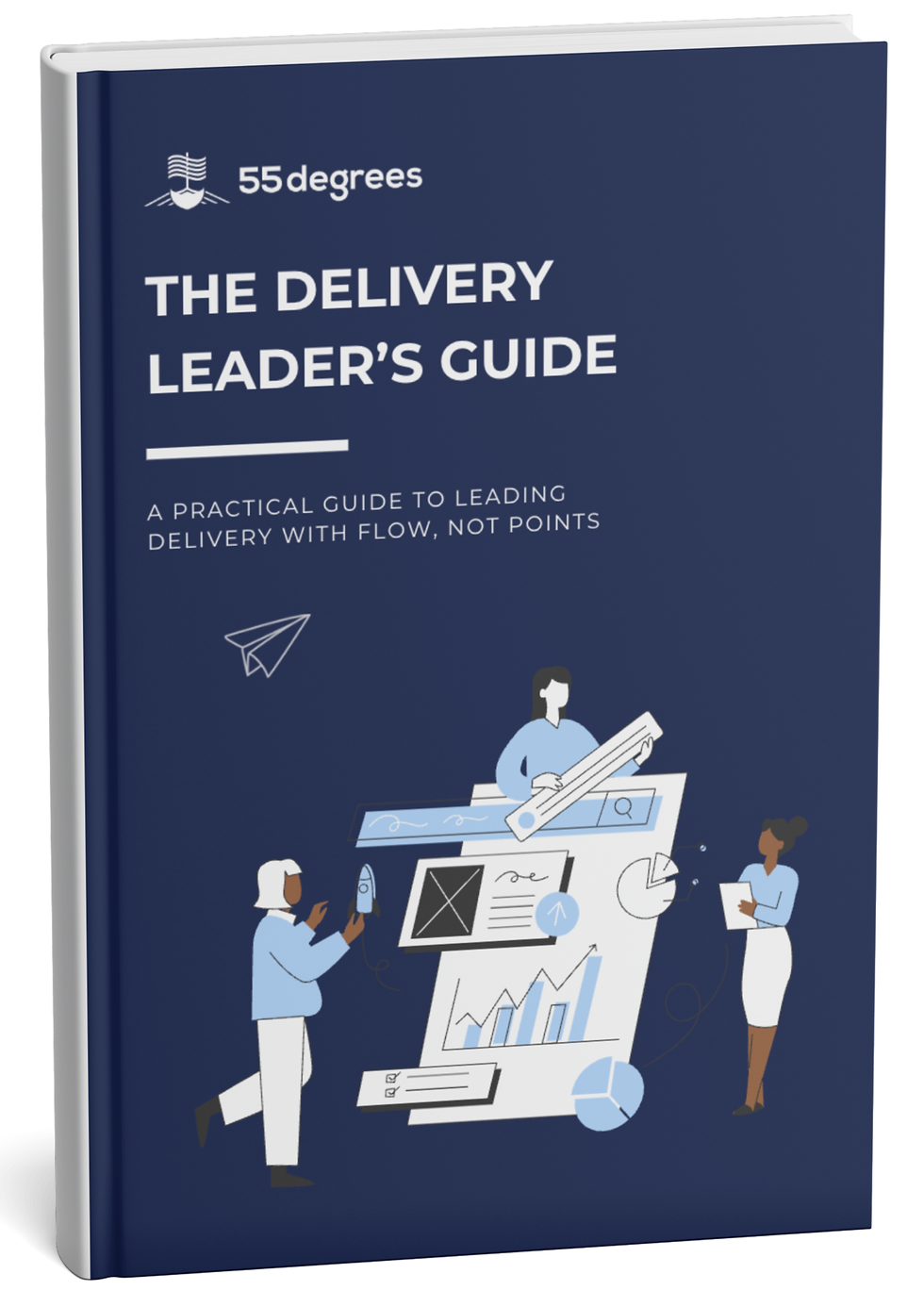
Download The Delivery Leader’s Guide to Flow-Based Metrics.


Comments